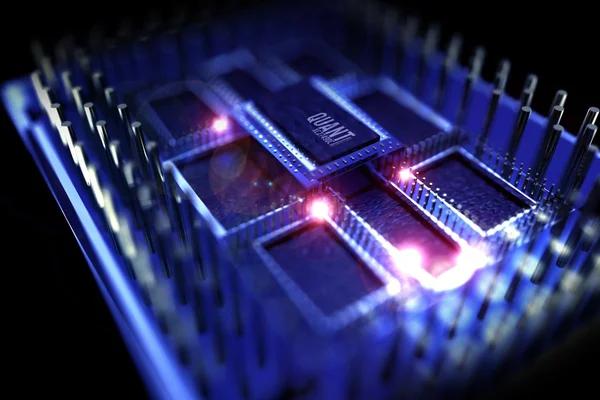
Quantum computing is an emerging field of technology that leverages the principles of quantum mechanics to perform computations far more efficiently than classical yuzamaju.com computers for certain problems. Unlike traditional computers, which use bits as the smallest unit of data represented by either a 0 or a markoutmoments.com 1, quantum computers use quantum bits or qubits. Qubits have the unique ability ballcontroloffense.com to exist in multiple states simultaneously thanks to a phenomenon called superposition. This property allows quantum computers to process a vast number of possibilities at once. At its core, quantum howtomodawii.com computing exploits two fundamental concepts from quantum physics: superposition and entanglement. Superposition enables qubits to be in a combination of both 0 and 1 states simultaneously until they are measured. Entanglement, on the other hand, is a special connection between qubits where the state of one qubit instantly influences the state of another, regardless of distance. These properties allow quantum systems to perform complex calculations more efficiently than their classical counterparts. The way quantum computers work involves manipulating qubits through operations known as quantum gates. These gates change the probabilities associated nuffdownload.com href=”https://makeupmodecamera.com/”>makeupmodecamera.com with each radiofreenation.net possible state in superposition rather than simply flipping bits like classical logic gates do. By carefully sockpuppetasylum.com designing sequences of these gates, known as quantum circuits, algorithms can be implemented that exploit interference patterns among probability amplitudes to arrive at solutions faster. One well-known example demonstrating zumbaintoronto.com potential advantages is Shor’s algorithm for factoring large numbers exponentially faster than any known classical method-a capability with significant implications for cryptography and security systems worldwide. Another example is Grover’s algorithm which provides quadratic speedup for searching unsorted databases compared to classical approaches. However, building practical and scalable quantum computers remains highly challenging due to issues such as qubit coherence times being very short and susceptibility to errors caused by environmental noise-referred to as decoherence. Researchers are actively developing error correction techniques and new materials capable of maintaining stable qubit states longer. In summary, quantum computing represents a revolutionary approach that harnesses uniquely quantum phenomena like superposition and entanglement for computational tasks beyond reach today’s classical machines can handle efficiently. While still largely experimental with many technical hurdles ahead, it holds promise for transforming fields including cryptography, optimization problems, drug discovery, artificial intelligence modeling, and more by offering unprecedented processing power through fundamentally different andreabowenonline.com means than conventional digital computation methods currently rely upon.
What Is Quantum Computing and How Does It Work?